What you need to know
What Makes a Great Easter Drink
Easter drinks occupy a unique space in the calendar: they need to bridge the gap between winter's comfort and summer's refreshment. The best spring cocktails share several characteristics that make them perfect for this transitional season.
Brightness is essential. After months of rich, warming drinks, Easter calls for citrus-forward flavours that wake up the palate. Lemon, grapefruit, and orange feature heavily in spring cocktails, cutting through the richness of traditional Easter foods while adding vibrancy to every sip. Fresh herbs play a supporting role too: mint beginning its season, basil adding Mediterranean warmth, and thyme contributing subtle earthiness.
Floral notes distinguish spring drinks from their summer counterparts. Elderflower appears everywhere in Easter cocktails, its delicate sweetness perfectly capturing the season. Rose, lavender, and violet add sophistication when used with restraint. These botanical elements connect your drinks to the garden coming back to life outside.
Lower alcohol content suits Easter's extended celebrations. Brunch flows into lunch, lunch into afternoon, afternoon into evening. Spritzes, Collins-style drinks, and champagne cocktails allow guests to pace themselves without feeling they're missing out. Session drinking (maintaining a pleasant buzz without tipping into excess) keeps the atmosphere convivial throughout a long celebration.
Effervescence matters more at Easter than almost any other time. Bubbles signal celebration, aid digestion, and add textural interest to drinks that might otherwise feel flat. Prosecco, champagne, and quality sparkling wine form the backbone of countless Easter serves, while soda water lengthens spirits into refreshing afternoon drinks.
Finally, presentation carries weight at Easter. This is a season of renewal and beauty: your drinks should reflect that. Pastel garnishes, edible flowers, crystal-clear ice, and elegant glassware make even simple serves worthy of the occasion.
Flavours to Embrace
Build your Easter drinks around these seasonal flavour profiles. Citrus forms the foundation: fresh lemon juice brightens everything it touches, while grapefruit adds sophisticated bitterness and orange brings accessible sweetness. Stone fruits like peach and apricot work beautifully in spritzes and punches, their soft sweetness complementing spring's gentler mood.
Floral elements make simple serves memorable. Elderflower liqueur has become the defining flavour of British spring cocktails, pairing naturally with gin, prosecco, and citrus. Use it judiciously: a little adds elegance, too much becomes cloying. Fresh herbs deserve prominent placement: mint in julep-style drinks, basil muddled with strawberries, rosemary as an aromatic garnish.
Light bitterness provides essential balance. Aperol's gentle bitterness has conquered British summers, but it works equally well at Easter. Campari suits more confident palates, while tonic water adds structure to gin-based serves without heaviness.
What to Avoid
Certain drinks feel wrong at Easter, no matter how delicious they might be in other contexts. Heavy, spirit-forward cocktails like Negronis or Old Fashioneds belong to autumn and winter: their weight sits uncomfortably alongside spring's lighter foods. Save the whisky for evenings by the fire, not Easter lunch in the conservatory.
Overly sweet drinks cause problems at extended celebrations. Sticky cocktails with excessive sugar or artificial flavours fatigue the palate quickly, leaving guests reaching for water rather than another round. Balance sweetness with acidity, and let quality spirits speak for themselves rather than masking them with syrup.
Anything served warm feels incongruous, even a Hot Toddy seems misplaced when daffodils are blooming. Easter looks forward to summer, not back to winter. Keep everything chilled, refreshing, and optimistic.
Essential Easter Brunch Cocktails
Easter brunch occupies a special place in British entertaining. It's more relaxed than Christmas lunch, more substantial than a summer garden party, and infinitely more forgiving than New Year's Eve. The drinks you serve should match this mood: celebratory enough to mark the occasion, but light enough that guests can still enjoy the roast lamb later.
The key to successful brunch drinks lies in timing and variety. Offer something immediately upon arrival: a pre-mixed Mimosa or a glass of prosecco with elderflower, so guests feel welcomed and festive from the moment they walk through the door. Then provide options that cater to different tastes and drinking speeds throughout the morning.
Brunch cocktails typically fall into two camps: sparkling wine-based drinks that feel celebratory and savoury options for those who prefer something with more backbone. Having both available ensures nobody feels overlooked, whether they want something sweet and bubbly or a proper Bloody Mary to set them up for the day.
Batching is your friend at brunch. Nobody wants to spend Easter morning measuring and shaking while guests wait. Prepare your Mimosa juices in advance, have your Bloody Mary mix ready to pour, and chill everything overnight so service is effortless.
The Classic Mimosa
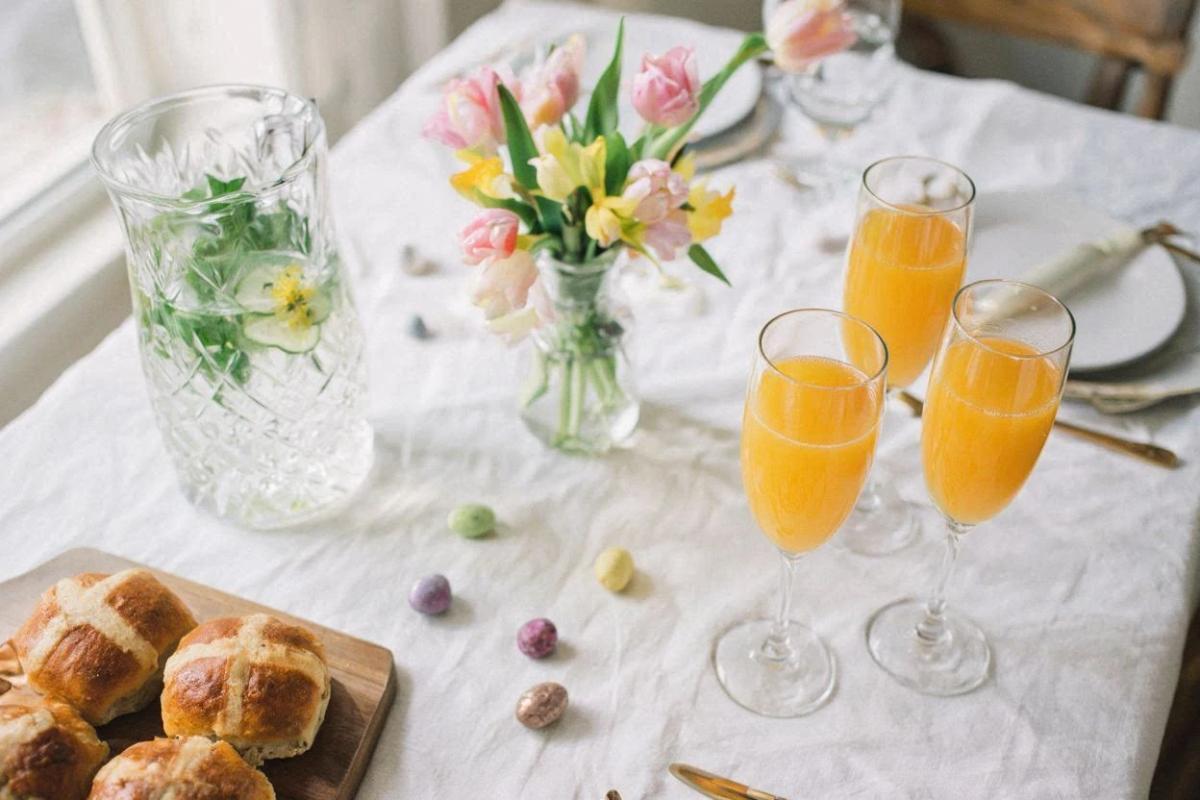
The Mimosa deserves its reputation as the defining brunch cocktail. It balances celebration with restraint: festive enough to mark Easter Sunday, but light enough that guests can enjoy several without compromising lunch.
The ratio matters more than people think. The Field Manual Mimosa is equal parts: 75ml champagne to 75ml fresh orange juice. That is the house standard. If you prefer the wine's character to lead, a drier 2:1 ratio (two parts sparkling wine to one part juice) is a reasonable preference. Use freshly squeezed orange juice; the bottled stuff cannot compare.
Quality sparkling wine makes a difference, but you needn't reach for vintage champagne. A good prosecco or Spanish cava provides the right balance of bubbles and crispness at a fraction of the price. Save the expensive champagne for drinking straight.
For Easter, consider a Mimosa bar approach. Set out carafes of different juices, classic orange, ruby grapefruit, blood orange, and peach purée, alongside bottles of chilled prosecco. Guests can mix their own combinations, reducing your hosting burden while adding an interactive element to the celebration.
The Bellini
Where the Mimosa is approachable and familiar, the Bellini offers Italian sophistication. Created at Harry's Bar in Venice, this combination of prosecco and white peach purée captures everything wonderful about spring drinking: delicate and easy to drink.
Fresh white peaches are traditional but rarely available at Easter. Quality peach purée or nectar makes an acceptable substitute, though you may need to adjust sweetness levels depending on the brand. Avoid anything with artificial flavours or excessive added sugar; the drink should taste of peaches, not confectionery.
The technique is simple but important. Pour the peach purée into the bottom of a chilled champagne flute: roughly one part purée to two parts prosecco. Add the prosecco slowly, allowing it to mix naturally with the fruit. Stir gently if needed, but avoid vigorous mixing that would flatten the bubbles.
Bellinis work beautifully for Easter because they feel special without demanding attention. They're elegant enough for a formal brunch, yet simple enough that you can prepare dozens without stress.
The French 75
For guests who want something more substantial than a Mimosa, the French 75 delivers champagne elegance with genuine cocktail credentials. Named after the French 75mm field gun for its alleged kick, this combination of gin, lemon, sugar, and champagne manages to be both refreshing and sophisticated.
Build the drink by shaking gin, fresh lemon juice, and simple syrup with ice until well chilled. Strain into a champagne flute and top with champagne or prosecco. The result is bracingly citrus, pleasantly dry, and more interesting than most brunch serves without being heavy.
The French 75 scales reasonably well for batching. Combine the gin, lemon juice, and syrup in advance: allow 45ml gin, 22ml lemon juice, and 15ml simple syrup per drink, and refrigerate until needed. Pour individual portions over ice, shake briefly, and top with champagne to order. The bubbles must be added fresh to maintain their life.
This cocktail particularly suits Easter lunch rather than breakfast. Its gin backbone and champagne finish feel celebratory and grown-up, perfect for raising a toast as the main course arrives.
The Bloody Mary
Not everyone wants sweetness at brunch. For savoury palates, and those seeking something more restorative, the Bloody Mary remains the standard. Its combination of tomato juice, vodka, and complex spicing provides substance and satisfaction that fruit-based cocktails cannot replicate.
The foundation of any good Bloody Mary is the mix. Tomato juice forms the base, but the character comes from what you add: Worcestershire sauce for umami depth, Tabasco or other hot sauce for heat, fresh lemon juice for brightness, celery salt for savoury complexity, black pepper for bite, and horseradish for sinus-clearing warmth. Balance these elements carefully: the drink should be lively and complex, not dominated by any single flavour.
Prepare your Bloody Mary mix the night before Easter. This allows the flavours to marry and meld, producing a more integrated final drink. Store it in the refrigerator and simply add vodka and ice to order the next morning.
The garnish matters enormously. A celery stick is traditional and practical: it serves as both stirrer and snack. Beyond that, consider a lemon wedge, a few olives, perhaps a cornichon or pickled onion. Some hosts go further with bacon strips, prawns, or entire salads balanced on the glass. Match your garnish ambition to your guest list.
Always prepare a Virgin Mary alongside the alcoholic version. The mix is delicious without vodka, and having both available ensures designated drivers and non-drinkers feel included from the start.
Afternoon Garden Drinks
Easter lunch has a pleasant habit of stretching into the afternoon, particularly when the weather cooperates. As plates are cleared and conversation flows, the drinks should evolve too, away from brunch bubbles toward something suited to lazy hours in the garden or conservatory.
Afternoon drinks need to walk a careful line. They must be interesting enough to maintain engagement, but light enough that guests don't flag before the evening. This is the domain of the spritz, the Collins, and the long, tall highball: drinks that deliver flavour without heaviness, refreshment without intoxication.
The key is extension. Take a spirit with character, add length with soda or tonic, brighten with citrus, and serve over plenty of ice. These drinks reward quality ingredients but forgive imprecise technique. They can be made in jugs and pitchers, simplifying service when you'd rather be enjoying your own celebration.
Spring herbs come into their own in afternoon serves. Mint is reaching its first flush, basil adds Mediterranean sunshine, and rosemary provides aromatic complexity. These botanical elements connect your drinks to the season and the garden around you.
The Elderflower Collins
If any drink captures British spring drinking, it's the Elderflower Collins. It combines London dry gin's juniper backbone with elderflower's delicate sweetness, brightened by lemon and lengthened with soda.
The construction is straightforward. Combine gin, elderflower liqueur (St-Germain is the standard, though British alternatives exist), and fresh lemon juice in a tall glass filled with ice. Stir to combine, then top with soda water. Garnish with a lemon wheel and, if available, a sprig of fresh mint or a few elderflowers.
Proportions can flex according to taste. Start with 45ml gin, 20ml elderflower liqueur, and 25ml fresh lemon juice, topped with 90ml soda water. Those who prefer sweeter drinks can increase the elderflower; those who want something drier can reduce it. The lemon juice is non-negotiable: without its brightness, the drink becomes cloying.
This cocktail batches beautifully for garden parties. Multiply the gin, elderflower, and lemon juice by your guest count, mix in a large jug, and refrigerate. When serving, pour over ice in individual glasses and add soda water to each. The fizz needs to be fresh; the base can wait.
The Aperol Spritz
No drink has conquered British summers quite like the Aperol Spritz, and there's no reason it shouldn't start its season at Easter. This Venetian import (bitter, bubbly, and brilliantly orange) bridges the gap between aperitif and refreshment with effortless style.
The classic formula couldn't be simpler: three parts prosecco, two parts Aperol, one part soda water, served over ice with an orange slice. Build it in a large wine glass filled with ice cubes: the vessel matters for the full Spritz experience. Add the Aperol first, then the prosecco, then a splash of soda, and finally the orange garnish.
Aperol's bitterness divides opinion, but its gentleness makes it more accessible than Campari. The orange and rhubarb notes complement spring foods beautifully, while the low alcohol content (Aperol is just 11%) makes this a genuine session drink. Guests can enjoy several throughout an afternoon without losing the plot.
For Easter, the Spritz's vibrant orange colour adds visual warmth to your drinks table. It photographs beautifully, not an irrelevant consideration in the social media age, and its Italian heritage lends a touch of continental sophistication to British celebrations.
Pimm's Cup
When Easter falls late in April and the weather turns genuinely warm, nothing says British celebration quite like a jug of Pimm's. This gin-based cup, properly the Pimm's No. 1 Cup, is summer drinking's opening salvo, and a late Easter provides the perfect excuse to make the first batch of the year.
The classic serve mixes Pimm's with lemonade at a ratio of one to three, poured over ice and loaded with fruit, cucumber, and mint. Traditionalists insist on cucumber, strawberry, orange, and mint as the canonical garnishes; pragmatists use whatever looks fresh and seasonal. The drink should look like a celebration: abundant, colourful, and generous.
Preparation is simplicity itself. Fill a jug with ice, add Pimm's and lemonade, then layer in your chosen fruits and herbs. Let it sit for five minutes to allow the flavours to mingle before serving. The longer it sits, the more the fruit flavours infuse, though it rarely survives long enough for this to matter.
Pimm's works brilliantly for Easter garden parties because it's self-service friendly. Place the jug on a table with glasses and let guests help themselves. Top up the lemonade and fruit as levels drop. The informality suits Easter's relaxed mood perfectly.
Spiced Rum and Ginger
While rum might seem unexpected at Easter, a light spiced rum serve bridges seasons beautifully. The spirit's vanilla and cinnamon notes echo winter's warmth while fresh ginger and lime push firmly toward summer refreshment.
The construction differs from the classic Dark and Stormy. Use ginger ale rather than ginger beer for a lighter, less assertive result: the fizzy sweetness complements spiced rum's character without overwhelming it. Build over plenty of ice in a tall glass, adding a generous lime wedge squeezed and dropped into the drink.
Quality spiced rum makes all the difference here. Craft expressions with genuine spice complexity reward the simple serve, while harsher commercial brands hide their shortcomings less successfully than in richer cocktails. This is a drink where the spirit's character leads, so choose accordingly.
The serve works particularly well for guests who find prosecco-based drinks too light or sweet. It offers substance and complexity without the heaviness of winter spirits, and its gentle spicing provides interest without demanding attention. Think of it as a conversation companion rather than a conversation starter.
After-Dinner and Dessert Drinks
Easter celebrations often stretch into the evening, and the drinks should evolve accordingly. After the roast lamb has been demolished and the hot cross buns reduced to crumbs, guests appreciate something to mark the transition from meal to evening.
After-dinner drinks serve several purposes. They aid digestion, provide a gentle caffeine lift if coffee alone seems insufficient, and signal that the formal eating portion of the day has concluded while the celebration continues. The best post-meal serves offer contrast to what came before: where lunch was savoury and substantial, evening drinks can be sweet, creamy, or bracingly bitter.
This is also the moment for smaller pours. After a full Easter lunch, nobody needs a pint of anything. Serve digestifs in appropriate glassware: small coupes, sherry glasses, or coffee cups, and let quality triumph over quantity. A perfectly made Espresso Martini serves better than an overflowing pint glass of indifferent spritz.
The challenge lies in matching drinks to what remains of guests' appetites. Chocolate eggs demand something that complements their richness; cheese courses call for traditional pairings; coffee alone sometimes needs a spirited enhancement. Having options available lets guests choose their own conclusion to the meal.
The Espresso Martini
No after-dinner cocktail has captured British affections quite like the Espresso Martini. Its combination of vodka, coffee liqueur, and fresh espresso provides caffeine, alcohol, and dessert-like satisfaction in a single elegant package, perfect for extending Easter celebrations into the evening.
The drink demands fresh espresso, properly extracted and allowed to cool slightly before shaking. Instant coffee cannot replicate the crema that floats atop a well-made Espresso Martini; if you lack an espresso machine, consider whether another drink might serve better. Quality coffee liqueur matters too: Kahlúa is standard, but smaller producers offer more interesting alternatives.
Shake vigorously with ice until the outside of the shaker frosts. The aeration creates the drink's signature foam, so don't skimp on the shaking time. Strain into a chilled coupe or martini glass, and garnish with three coffee beans, traditionally representing health, wealth, and happiness.
Timing matters with Espresso Martinis. The foam subsides within minutes, so serve immediately after preparation. This makes them tricky for large gatherings, but the theatre of preparation (the vigorous shaking, the careful straining, the elegant presentation) makes them worth the effort for smaller groups.
Brandy Alexander
For those who prefer dessert in a glass, the Brandy Alexander delivers indulgence without apology. This creamy combination of cognac, crème de cacao, and cream tastes like sophisticated chocolate, perfect alongside Easter eggs or as a standalone sweet treat.
The drink dates to the early twentieth century and has survived because it works. Equal parts cognac, dark crème de cacao, and fresh cream, shaken hard with ice and strained into a chilled coupe. A dusting of freshly grated nutmeg on top adds aromatic complexity and visual appeal.
Rich as it is, the Brandy Alexander shouldn't be cloyingly sweet. Quality cognac provides backbone and warmth, while the crème de cacao contributes chocolate flavour without excessive sugar. Use fresh double cream rather than single cream or milk: the viscosity is essential to the drink's luxurious texture.
This serves beautifully alongside Easter's chocolate traditions. The cocoa notes complement rather than compete with chocolate eggs, while the brandy's warmth cuts through the richness. For guests who claim they couldn't possibly eat another thing, a Brandy Alexander often proves irresistible.
Limoncello Spritz
When something lighter suits the moment, the Limoncello Spritz offers Italian digestif tradition with spring freshness. This effervescent combination of limoncello, prosecco, and soda provides palate-cleansing brightness after a substantial meal.
Build the drink over ice in a wine glass. Add one part limoncello to two parts prosecco and a splash of soda water. Garnish with a lemon wheel or a sprig of fresh mint. The result should be refreshing and citrus-forward, with enough sweetness to satisfy dessert cravings without heaviness.
Quality limoncello varies enormously. The best examples, often from Italy's Amalfi coast, balance intense lemon flavour with just enough sweetness to remain drinkable. Inferior versions taste of artificial flavouring and excessive sugar. If you can find a quality British-made limoncello, so much the better.
The Limoncello Spritz works as a bridge between dinner drinks and evening relaxation. It's lighter than an Espresso Martini, less rich than a Brandy Alexander, but more interesting than another glass of prosecco. For guests who want to keep drinking without returning to serious alcohol, it's perfect.
Non-Alcoholic Options
Easter is a family celebration, and family means diversity: children too young to drink, adults who choose not to, designated drivers getting everyone home safely, and guests who simply prefer something soft. Thoughtful hosts cater for all of them with drinks that feel special rather than afterthoughts.
The mistake many make is treating non-alcoholic drinks as an absence, removing alcohol from the equation and hoping what remains proves acceptable. Better to approach them positively, creating drinks that stand on their own merits. The best non-alcoholic serves are delicious in their own right, not compromise versions of something better.
Presentation matters enormously here. Serve non-alcoholic drinks in proper glassware: champagne flutes for mocktail Mimosas, wine glasses for sparkling punch, highball glasses for crafted soft drinks. Children especially appreciate being treated like grown-ups at celebrations; a Shirley Temple in a proper glass delights in ways squash in a beaker never could.
The options below represent starting points rather than exhaustive lists. The principle remains consistent: create drinks with intention, balance flavours thoughtfully, and present them with care. Every guest should feel that their drink was chosen, not settled for.
Virgin Mimosa
The simplest non-alcoholic brunch drink is also one of the most effective. Combining sparkling apple juice with fresh orange juice creates something that looks, pours, and feels like a Mimosa without any alcohol content.
The key is using quality sparkling apple juice: Appletiser or similar provides the right combination of fizz and flavour. Mix it with freshly squeezed orange juice in the same proportions you'd use for a traditional Mimosa, and serve in champagne flutes. The result is celebratory, delicious, and entirely appropriate for guests of any age.
Children particularly appreciate Virgin Mimosas because they match what the adults are drinking. There's joy in clinking glasses for a toast when everyone holds something that looks equally special. This social inclusion matters more than the drink's specific flavours.
Extend the concept to a non-alcoholic Bellini by using sparkling apple juice with peach purée, or create a Virgin Kir Royale with blackcurrant cordial. The template, sparkling juice base plus fruit flavour in a champagne flute, works endlessly.
Elderflower Lemonade
Few soft drinks capture spring as perfectly as elderflower lemonade. This combination of elderflower cordial, fresh lemon juice, and sparkling water delivers floral sophistication without alcohol, satisfying adults who want complexity alongside children who want something sweet.
Build the drink simply. Add elderflower cordial to a tall glass filled with ice: roughly 25ml per serving, adjusting to taste. Squeeze in fresh lemon juice (half a lemon provides good balance), then top with sparkling water and stir gently. Garnish with a lemon wheel and, if available, a sprig of mint.
Quality cordial makes an enormous difference. Belvoir and Bottlegreen offer reliable options, while numerous small producers create excellent artisanal alternatives. Avoid anything with artificial flavourings, which taste chemical rather than floral.
This drink scales effortlessly for batches. Mix cordial and lemon juice in a jug, refrigerate until needed, then pour over ice and add sparkling water to order. Like its alcoholic counterpart, the fizz must be fresh; the flavour base can wait.
Cucumber Mint Cooler
For something refreshing beyond sweet drinks, the cucumber mint cooler offers spa-like refreshment with genuine sophistication. This savoury-leaning soft drink cleanses the palate between courses and satisfies guests who find fruit-based mocktails too sweet.
Muddle cucumber slices gently with fresh mint leaves in the bottom of a tall glass: you want to release their flavours, not pulverise them. Add ice, squeeze in lime juice, and top with soda water or tonic water depending on whether you want neutral or slightly bitter results. A pinch of salt enhances the cucumber's natural flavour.
The drink benefits from quality ingredients but requires no special equipment. Fresh cucumbers, fresh mint, fresh limes, all easily obtained, combine into something that feels considered rather than improvised. It's particularly welcome during the afternoon, when guests may tire of sweetness.
For larger gatherings, blend cucumber with water to create a cucumber juice, strain out solids, and use this as your base. It keeps refrigerated for several hours and simplifies service considerably while maintaining the drink's essential character.
Easter Food and Drink Pairings
Easter's traditional foods (roast lamb, glazed ham, hot cross buns, chocolate eggs) deserve drinks that complement rather than clash. Thoughtful pairing improves both food and drink, creating combinations greater than either element alone.
The principle underlying successful pairing is balance. Rich foods need drinks with acidity to cut through them; delicate dishes demand gentle accompaniments that won't overwhelm subtle flavours. Consider whether you want harmony (similar flavour profiles reinforcing each other) or contrast (opposing characteristics creating interest through difference).
Easter's timing complicates matters slightly. The holiday moves each year, meaning weather varies enormously between late March Easters and late April celebrations. Adjust your pairings accordingly: lighter drinks suit warmer weather, while cooler Easters might welcome slightly richer options.
Below are pairing suggestions for Easter's most common foods. Treat them as starting points rather than rules; personal preference should always guide final decisions.
Pairing with Roast Lamb
Lamb's rich, savoury character calls for drinks with enough presence to stand alongside it without competing for attention. Herbal notes work particularly well, echoing the rosemary and mint that traditionally accompany the meat.
Gin-based cocktails complement lamb beautifully. The juniper and botanical character of a good gin provides complexity that matches lamb's depth, while citrus elements cut through the fat. An Elderflower Collins serves perfectly alongside roast lamb, its floral notes harmonising with the meat's earthiness.
For wine drinkers, rosé offers surprising versatility with lamb. Its acidity handles the richness while red fruit notes complement the meat's savour. Choose dry rather than sweet rosé: Provence styles work particularly well. Alternatively, a medium-bodied red wine like Pinot Noir provides classic pairing without overwhelming spring's lighter mood.
Avoid anything too sweet with lamb. The meat's savouriness clashes with excessive sugar, creating discord rather than harmony. If guests prefer sweeter drinks, suggest they enjoy them between courses rather than alongside the main event.
Pairing with Ham
Glazed ham's sweetness and saltiness create different pairing opportunities than lamb. The meat's caramelised exterior particularly rewards drinks that echo or contrast its sugary notes.
Champagne and sparkling wine pair magnificently with ham. The bubbles cut through richness, while wine's acidity balances the sweetness of the glaze. A Mimosa works well if you want to maintain the brunch theme; straight prosecco serves equally well for those who prefer it.
Tropical flavours complement ham through unexpected harmony. Pineapple and ham pair famously in cooking; this extends to drinks. A lighter rum punch with pineapple juice works surprisingly well, as does any cocktail featuring tropical fruit notes. The sweetness matches the glaze while the fruit provides freshness.
Spiced rum also deserves consideration with ham. The warm vanilla and cinnamon notes echo flavours often present in ham glazes, creating a sense of coherence across the plate and glass. A light spiced rum and ginger ale serve, heavy on the ice and lime, complements glazed ham beautifully.
Pairing with Chocolate
Easter's chocolate traditions demand drinks that can handle cocoa's intensity without surrendering to it. The key lies in matching richness with richness, or providing contrast through coffee's bitter depth.
The Espresso Martini represents chocolate's perfect partner. Coffee and chocolate share flavour compounds, creating natural harmony, while the caffeine keeps guests alert during post-lunch chocolate consumption. The drink's subtle sweetness complements chocolate without competing with it.
Brandy Alexander takes a different approach, adding more chocolate flavour through crème de cacao rather than trying to contrast it. This works particularly well with dark chocolate eggs, where the brandy's warmth cuts through cocoa's bitterness while the cream adds textural contrast.
For lighter chocolate pairings (white chocolate, milk chocolate eggs), consider fruit-forward options. A raspberry prosecco or strawberry Bellini provides brightness that prevents chocolate from becoming cloying. The fruit notes refresh the palate between bites, extending how long guests can enjoy their Easter eggs.
Hosting Tips and Practical Considerations
Successful Easter entertaining requires more than good recipes. Practical preparation (batching in advance, timing drinks to the celebration's rhythm, ensuring appropriate quantities) makes the difference between a relaxed host and a frazzled one.
The fundamental principle is front-loading work. Everything that can be prepared in advance should be. Squeeze citrus the morning of the event, prepare drink bases the night before, chill glassware and bottles early. When guests arrive, you should be arranging garnishes and pouring drinks, not scrambling to find the jigger.
Batching transforms Easter entertaining from impossible to enjoyable. Most of the drinks in this guide can be partially or fully prepared in advance, with only final assembly required at service. Identify which elements of each drink tolerate waiting (spirit bases, juice mixes, syrups) and which must be fresh (carbonation, ice, garnishes), then plan accordingly.
Think through the day's rhythm. Guests arriving mid-morning need drinks immediately; lunch service requires wines or cocktails that complement food; afternoon stretches demand refreshing serves that maintain energy without overwhelming; evening calls for something to signal transition. Plan your drinks menu around these moments rather than treating the day as undifferentiated time.
Batching for Easter
The Mimosa bar represents ideal Easter batching. Prepare multiple juices (fresh orange, ruby grapefruit, blood orange, peach purée) in attractive carafes or jugs. Chill several bottles of prosecco or champagne. Provide champagne flutes and let guests mix their own drinks. You've created variety and interactivity while doing almost nothing during the event itself.
Bloody Mary mix benefits enormously from advance preparation. Combine all non-alcoholic elements the night before, allowing flavours to marry overnight. Refrigerate in a large jug or dispenser. At service, simply add vodka to individual glasses or let guests pour their own. The mix improves with time; day-of preparation tastes less integrated.
Punch is the simplest Easter batch option. Combine spirit, juice, sweetener, and any flavourings in a large bowl or dispenser. Add ice and garnishes just before service, keeping additional ice on hand to replenish as it melts. Guests serve themselves, freeing you entirely from bar duties.
The golden rule: never batch anything carbonated. Bubbles flatten within hours, leaving sad, flat drinks. Always add soda water, tonic, or sparkling wine to individual serves at the moment of service. The base can wait; the fizz cannot.
Quantities and Planning
Easter celebrations vary enormously in length, making quantity planning tricky. A focused brunch requires different provisions than an all-day affair stretching from morning coffee to evening digestifs.
For brunch-only events, plan on two to three drinks per guest over two to three hours. This might mean two Mimosas and a coffee, or a Bloody Mary followed by a Bellini. Have enough for four drinks per person just in case, but expect consumption closer to two or three.
All-day celebrations demand more generous planning. Expect four to six drinks per person over eight or more hours, with consumption front-loaded toward brunch and peaking again in the late afternoon. The long gaps between drinks during lunch and post-lunch relaxation make the per-hour consumption surprisingly moderate.
Always over-cater on non-alcoholic options. Guests drink more soft drinks than you expect, particularly between alcoholic serves and during food. Sparkling water consumption alone can be substantial. Running out of non-alcoholic options feels inhospitable; having extra costs little and saves embarrassment.
Stock more ice than seems reasonable. It melts, it gets forgotten in drinks, it disappears faster than any other party provision. For a gathering of ten, have at least five kilograms available, more if you're batching drinks in large vessels.
Presentation and Timing
Easter's visual traditions (decorated eggs, spring flowers, pastel colours) should extend to your drinks presentation. Edible flowers garnishing cocktails, fresh herbs in abundance, citrus wheels cut with care: these details communicate thoughtfulness and mark the occasion as special.
Glassware matters more than people admit. Champagne flutes make Mimosas feel celebratory; proper wine glasses make spritzes feel sophisticated; tall, elegant highball glasses transform simple serves into something worthy of Instagram. If your everyday glasses don't suit, consider renting quality glassware for larger gatherings.
Time your drink offers to the celebration's natural rhythm. Greet arrivals with something already poured: prosecco, a Mimosa, sparkling elderflower for non-drinkers. Offer drink transitions at natural breaks: after starters clear, when moving from table to garden, when dessert arrives. These moments give guests permission to switch drinks without feeling like they're asking for too much.
Clear empties promptly but not obsessively. A table strewn with abandoned glasses feels chaotic; hovering to remove glasses the moment they empty feels oppressive. Find the middle ground, clearing during natural pauses in conversation or when guests move between spaces.
Easter Cocktails Comparison: Timing, Difficulty, and Characteristics
Classic Mimosa
Bellini
French 75
Bloody Mary
Aperol Spritz
Elderflower Collins
Pimm's Cup
Espresso Martini
Limoncello Spritz
| Cocktail | Best Served | Difficulty | Batch Friendly | Alcohol Level |
|---|---|---|---|---|
| Classic Mimosa | Brunch arrival | Easy | Yes (Mimosa bar) | Low |
| Bellini | Mid-morning | Easy | Yes | Low |
| French 75 | Brunch toast | Medium | Partial | Medium |
| Bloody Mary | Brunch | Medium | Yes (base only) | Medium |
| Aperol Spritz | Afternoon | Easy | No | Low |
| Elderflower Collins | Afternoon | Easy | Yes | Medium |
| Pimm's Cup | Warm afternoon | Easy | Yes | Low |
| Espresso Martini | After dinner | Medium | No | High |
| Limoncello Spritz | Digestif | Easy | No | Medium |