Whiskey Cocktails, page 2
74 recipes, page 2 of 4
Base Spirit
Difficulty Level
Honey Sour
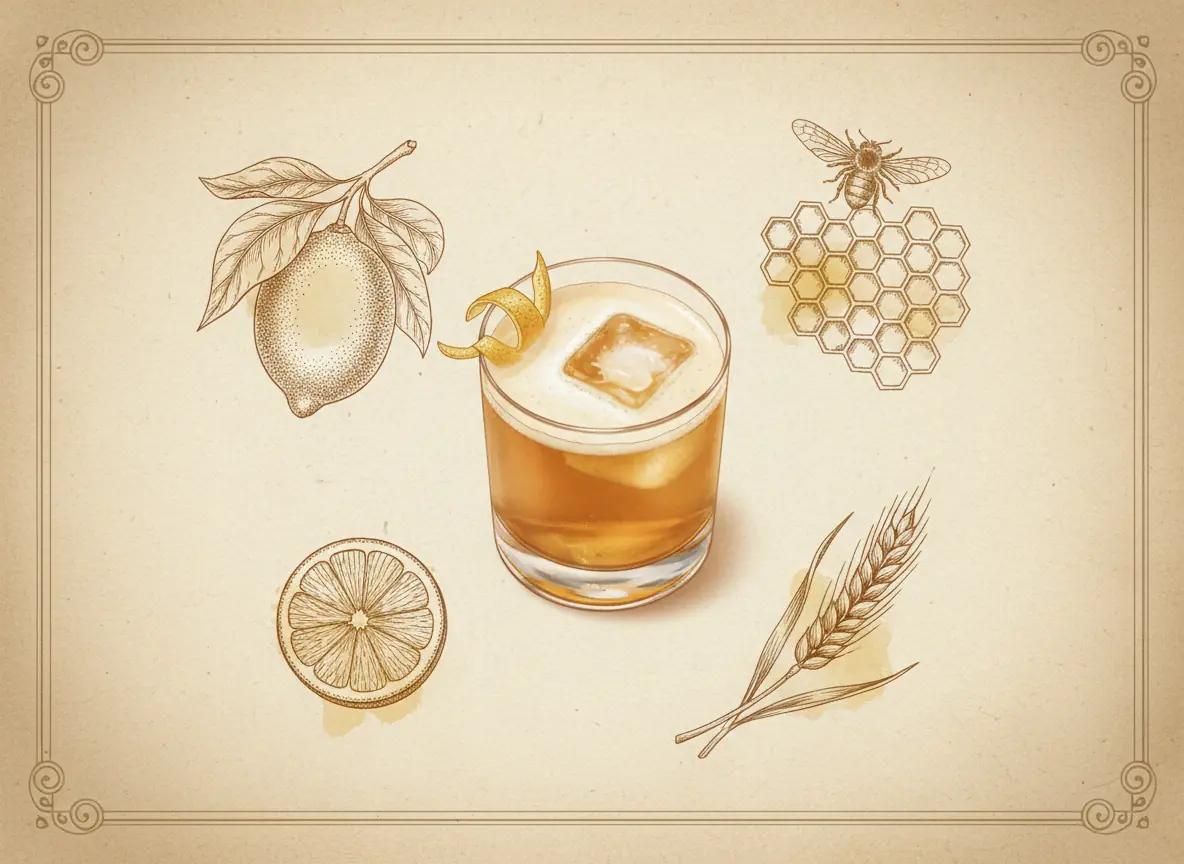
The Whiskey Sour is one of the most accommodating formats in the canon, because its three-ingredient structure takes sweetener variations that produce meaningfully different drinks rather than mere substitutions. The Honey Sour is the most instructive of them. Replacing simple syrup with honey syrup changes the texture, the aromatic character, the mid-palate weight and the relationship between the bourbon and the lemon, which is enough to justify a separate entry rather than a footnote. Honey brings a floral, slightly waxy sweetness with genuine botanical depth that simple syrup does not possess, and it interacts with the vanilla and caramel of a good bourbon in a way that makes the pairing taste considered rather than incidental. The egg white is optional here as it is in the parent, and the decision changes the drink considerably. With it the Honey Sour is silky and rounded; without it, sharper and more directly tart. Both are correct.
Hot Spiced Cider
The Hot Spiced Cider is a spiced cider base for eight, held warm on the stove, with the spirit added one mug at a time. Fifty millilitres of bourbon or dark rum goes in at the pour, which means every guest chooses their own measure or skips it entirely. The base does two jobs, and that is the whole design. Left alone it is a complete alcohol-free drink rather than a compromise; spiked, it becomes the adult serve without a second pot. On a family occasion, one pan that serves drivers, children and drinkers is worth more than a better recipe that only serves one of them. Adding the spirit per mug is also temperature management. The base holds warm for hours without harm, but spirit held hot loses its aromatics steadily, so it goes in fresh at the moment of serving. Bourbon reads as caramel against the apple; dark rum reads as molasses. Set both bottles beside the pot.
Hot Toddy
The Hot Toddy is drinking’s oldest comfort: spirit, sweetness, lemon and hot water, a formula eighteenth-century Scotland settled on and no century since has improved. The name may descend from Todd’s Well, an Edinburgh spring whose water was said to make the whisky, or from an Indian palm drink that sailors carried the word home from; the drink itself needs no etymology to explain its survival. It endured as medicine as much as pleasure. Generations were prescribed a toddy for colds by grandmothers and occasionally by doctors, and the honest modern verdict is that they were half right: hot liquid, steam, honey and lemon genuinely soothe a raw throat and stuffed head, and the whisky genuinely improves morale, while curing nothing. The toddy’s real prescription is comfort, reliably filled. The build rewards restraint. Water just off the boil rather than at it, honey rather than raw sugar, lemon squeezed and dropped in, the whisky added last so its aromatics survive: a drink this simple has nowhere to hide a heavy hand, and its balance point, warming rather than scalding, sweet rather than syrupy, is the whole craft.
Hot Toffee Apple
The Hot Toffee Apple is the definitive Bonfire Night serve, and it is a house recipe rather than a classic: hot apple cider poured over bourbon and caramel syrup in a heatproof mug, with a cinnamon stick standing in as both stirrer and garnish. It was written for a cold garden on the fifth of November, and it tastes the way the evening smells. The method is the quiet discipline in it. Only the cider goes near the heat, while the bourbon and caramel wait in the mug, so none of the spirit’s aromatics cook off on the stove. Warm the cider to steaming, keep it below the boil, pour it over and stir. The drink is ready before the first rocket goes up. It also travels. The recipe batches well for a crowd, holds in a preheated flask for the walk to the display, and takes a spiced rum swap when you want the baking spice deepened.
Hunter
The Hunter is rye and cherry brandy at two to one, stirred over ice, and there is nothing else in it. It comes from the turn-of-the-century books, where it sat among a run of sporting names, and no bartender is credited with it. The arithmetic is the Rusty Nail's: a spirit and its sweetened liqueur shadow at a fixed ratio, no citrus, no bitters, no dilution beyond the stir. What changes is the register. Where Drambuie brings honey and heather to Scotch, cherry brandy brings dark stone fruit and a kernel note to rye, and rye's pepper is what stops it settling into cordial. Its practical virtue is portability. Nothing in it spoils, which is what a hip flask actually requires, and the name has always understood that. It is the drink to decant for a cold afternoon outdoors, which almost nothing else in the canon can honestly claim of itself.
Improved Whiskey Cocktail
This drink is why the Old Fashioned is called the Old Fashioned. The original cocktail of the early 1800s was spirit, sugar, water and bitters and nothing else. As the century went on, bartenders started improving it with the imported luxuries arriving on the back bar: a little maraschino, a dash of absinthe, a better grade of sugar, a lemon twist. Jerry Thomas codified the result in his 1876 edition and called it Improved. Not everyone wanted it. Drinkers who preferred the plain version began asking for their whiskey cocktail made the old-fashioned way, and by the 1880s that counter-order had hardened into a name on menus. The Old Fashioned is the only classic cocktail named by a complaint, and every one poured since is technically a vote against this drink. Taste them side by side and the argument replays. The maraschino adds a dry cherry and almond glow, the absinthe threads a herbal shadow through the rye, and what you end up with sits somewhere between an Old Fashioned and a Sazerac. Improvement was a fair description.
Irish Coffee
The Irish Coffee was invented at the Foynes flying-boat terminal on the Shannon estuary in 1943, when chef Joe Sheridan was asked to warm a planeload of passengers turned back by Atlantic weather. He put Irish whiskey in their coffee, and when an American asked whether it was Brazilian coffee, Sheridan answered that it was Irish coffee. The terminal became Shannon Airport, the drink became the house welcome, and a genuine classic was born in a departure lounge. Its second act belongs to San Francisco. Travel writer Stanton Delaplane drank it at Shannon and spent a night in 1952 helping the Buena Vista Cafe reverse-engineer it, a process that famously stalled on the cream refusing to float. The cafe has poured tens of millions since. What separates a real Irish Coffee from hot whiskey with dairy is architecture: hot sweetened coffee and spirit below, cold thick cream above, and the drink taken through the cream so every sip arrives twice, warm then cool, bitter then rich.
Irish Maid
The Irish Maid is The Dead Rabbit’s contribution to the Maid family: four slices of cucumber muddled in the shaker, Irish whiskey over elderflower liqueur and fresh lemon, shaken hard and strained over rocks under a ribbon of cucumber. Jack McGarry, the Belfast bartender behind the lower Manhattan bar, is widely credited with the build, a rework of Sam Ross’s Kentucky Maid with the bourbon swapped for Irish whiskey and elderflower doing the sweetening. The result reads brighter than its parent. Cucumber’s cool water and elderflower’s perfume sit naturally with Irish whiskey’s orchard fruit, and the lemon holds the whole thing taut. At equal parts liqueur and citrus nothing dominates, and the whiskey stays legible through the garden. It has travelled the way modern classics do, from one bar’s menu into the standing repertoire, and it deserves the trip: a whiskey drink for people who claim not to drink whiskey, and a summer serve from a category that mostly hibernates.
Jack’s Godfather Highball
Jack's Godfather Highball is the Godfather stretched out and given cola. Tennessee whiskey and amaretto, which is the whole of the original, then 75ml of cola over ice in a tall glass. The Godfather is a two-ingredient after-dinner drink: whiskey and almond liqueur, served short. It is rich and slightly heavy, which is fine for one at the end of an evening and tiring for two. Lengthening it solves that, but only if the cola has enough character to referee. A thin, purely sweet cola simply adds sugar to a drink that already has amaretto in it. The ratio shifts in the tall version. Thirty millilitres of whiskey to twenty of amaretto is closer to equal than the Godfather usually runs, because almond sits higher and reads louder once there is length and carbonation underneath it. It is a published brand serve rather than a bartender's creation, which is worth knowing and does not make it a worse drink.
La Louisiane
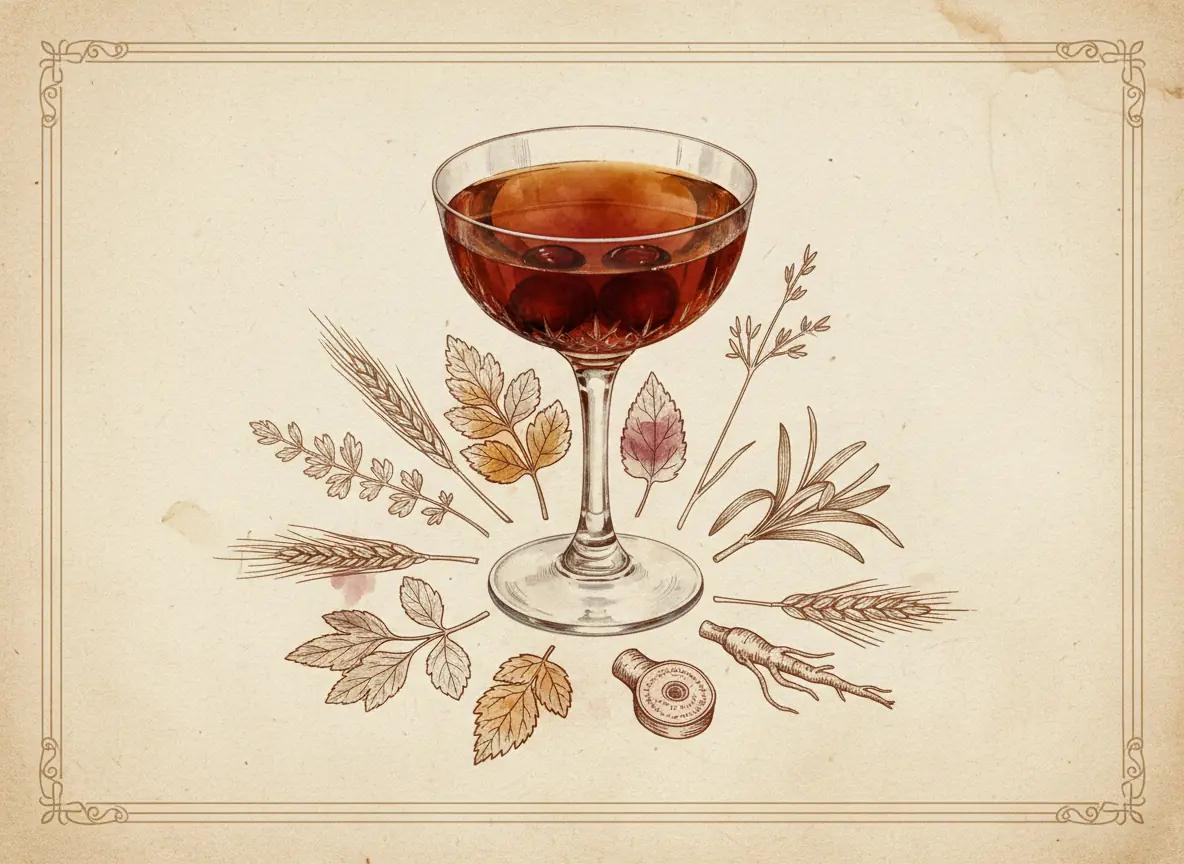
La Louisiane was the house cocktail of Restaurant La Louisiane, one of New Orleans' most storied dining establishments, and appeared in Stanley Clisby Arthur's 1937 guide "Famous New Orleans Drinks and How to Mix 'Em." It is a Manhattan variation in structure, rye whiskey and sweet vermouth as the foundation, with Bénédictine replacing the conventional sweetener and absinthe adding an aromatic undercurrent that marks it unmistakably as a product of New Orleans drinking culture. It is a drink of considerable depth for something built in a mixing glass with no citrus and no theatre. The Bénédictine brings honey, herbal complexity, and a warmth that simple syrup or even a standard liqueur cannot replicate. The absinthe is a seasoning, not a feature. Too much and it dominates. The correct amount is the one you can sense but cannot isolate. Like many New Orleans classics, La Louisiane rewards slow consumption and a quality vermouth. This is not a drink to build with a vermouth that has been open for three months. Treat it as a perishable ingredient and the drink will tell you why immediately.
Left Hand
The Left Hand is a Boulevardier with three dashes of chocolate bitters in it, which sounds like a footnote until you taste one. Cacao is dry rather than sweet, and it sits exactly between bourbon's barrel vanilla and Campari's bitter orange, joining two things that in a plain Boulevardier stay politely separate. It is attributed to Sam Ross, working out of Milk & Honey in New York in the late 2000s, and it comes as half of a pair. The Right Hand is the same drink with aged rum in place of the bourbon, built by his colleague Michael McIlroy. Two hands, two base spirits, one idea. The proportions are modern: forty-five, twenty-two, twenty-two rather than the equal measures a Boulevardier often takes. That trim is as much a part of the drink as the bitters are, because it is what keeps the Campari framing the whiskey instead of covering it.
Lynchburg Lemonade
Lynchburg Lemonade is Tennessee whiskey, triple sec, fresh lemon and sparkling lemonade over ice, named for the town where Jack Daniel's is distilled. It drinks dangerously easily, which was always both the point and the problem, and the reason a distillery eventually wanted it for itself. Tony Mason built it in 1980 at his bar in Huntsville, Alabama, and by the middle of the decade the distillery was running it as a national campaign. Mason sued for misappropriation. By the usual account a jury found in his favour and awarded him one dollar in nominal damages, on the grounds that he could not demonstrate a financial loss. That is the drink's permanent garnish: a genuinely good highball, a national marketing campaign, and an inventor who won his case and collected a dollar. Naming him is the least the recipe can do, and the story has outlived the campaign it lost to.
Manhattan
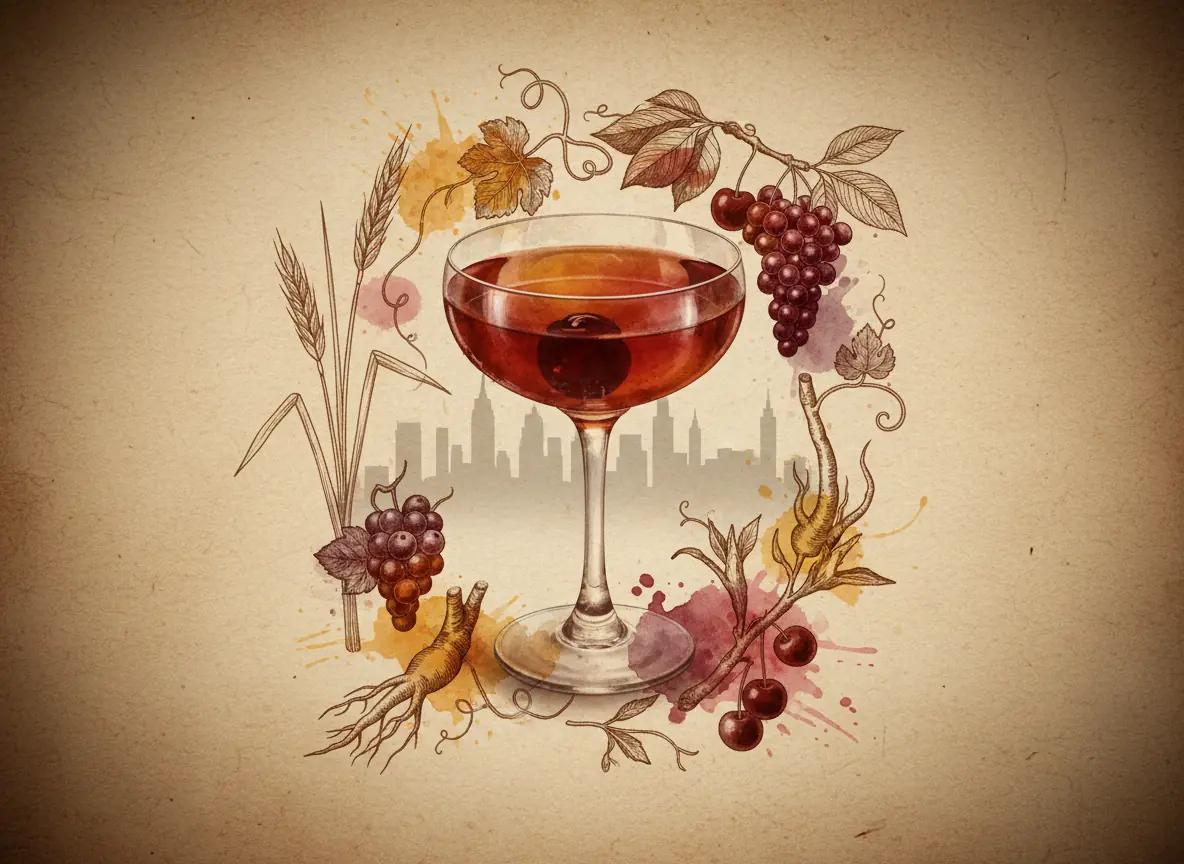
The Manhattan is the oldest documented whiskey cocktail in the American canon and the template for every stirred, spirit-forward classic that followed. It appeared in bar guides of the 1880s already described as an established drink, suggesting an origin in the 1870s. The most commonly cited account places its creation at the Manhattan Club in New York, at a banquet hosted by Lady Randolph Churchill in honour of presidential candidate Samuel Tilden; the account is disputed, Lady Churchill being documented elsewhere on the date in question, but the Manhattan Club association remains the most plausible origin available. Rye whiskey, sweet vermouth, and Angostura bitters, stirred and served cold with a cherry. The structure is the foundation of the Vieux Carré, the Boulevardier, the Rob Roy, and every other stirred whiskey drink that followed, and understanding it is the most direct route into that entire family. The sweet vermouth is the variable that most determines the finished drink. A stale or poorly chosen vermouth does not simply diminish the Manhattan; it defines it. The drink’s simplicity leaves the vermouth nowhere to hide.
Maple Old Fashioned
The Maple Old Fashioned is autumn performing the Old Fashioned’s single swap: real maple where the sugar sat, bourbon and bitters left constant. It is the folk-modern reading that spread from New England’s bars to everywhere the leaves turn, and no author claims it. October pours it. The maple is the whole argument. Dark-grade syrup carries a toasted forest depth through bourbon’s vanilla, so a sweetness that remembers being a tree meets a spirit that remembers being a barrel. The pairing reads as seasonal because it genuinely is: the same woods, a few centuries apart. It completes the Old Fashioned’s sweetener compass, which now points in four directions: demerara for the standard reading, honey by the Gold Rush’s logic, maple for the fall, and the liqueur wing for everything else. One frame, every accent, and the same lesson taught four times over about what a sweetener actually contributes to a drink.
Mint Julep
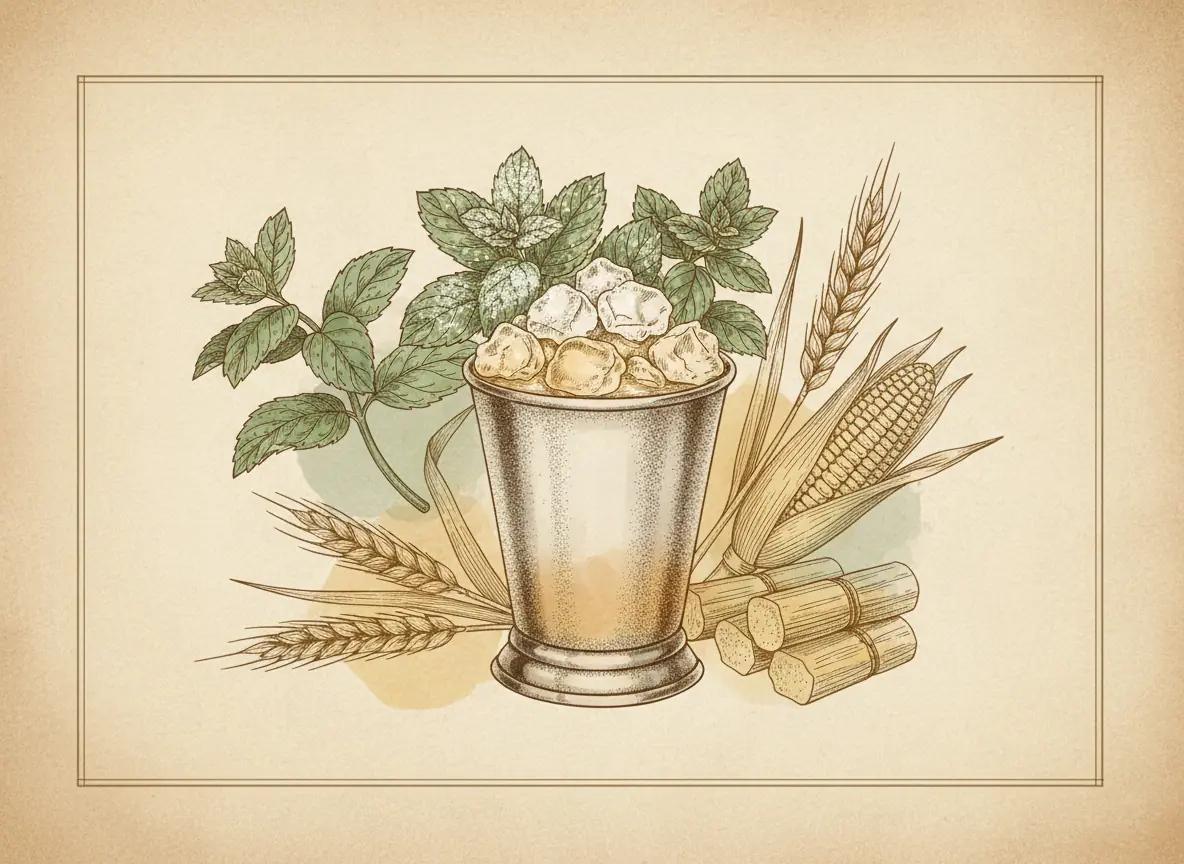
The Mint Julep is one of the oldest documented American cocktails, in written records by 1803 and tied to the American South throughout its history. The word julep derives from the Persian gulab, rosewater, which reached English through Arabic and Latin as a term for a sweet medicinal drink. American bar culture shed the medicine and kept the pleasure. The bourbon association is geography rather than original design. Rye was the dominant American spirit when the Julep first appeared in print, and early recipes used rye, brandy or whatever was to hand. Kentucky’s distilling industry and the Derby’s adoption of the drink completed the change. Technique separates a properly built Julep from bourbon with mint on top: mint pressed rather than muddled, sugar dissolved before the bourbon arrives, crushed ice packed firmly enough to hold the bouquet upright, and a straw short enough to keep the nose in the mint. These are not optional refinements.
Mizuwari
The Mizuwari is Japan’s answer to a question the West never thought to ask properly: what if whisky and water were the entire ceremony? The name means cut with water, and the izakaya and office-bar serve of whisky over ice with still water at roughly one to two built Japan’s whisky culture glass by patient glass. The ritual is the recipe. Ice stacked to the brim, whisky poured and stirred a dozen or so unhurried turns, water added and stirred a few more, with the dilution opening the malt’s quiet registers the way a splash opens a dram at a tasting. Nothing here is rushed and nothing at all is measured by eye. It is the highball’s still sibling and the session’s gentlest architecture. Japanese whisky takes its signature serve here, and the result is food-friendly, low in strength by construction, and about the clearest proof available anywhere that attention is itself an ingredient.
Monte Carlo
The Monte Carlo is a Manhattan with Bénédictine where the vermouth should be. Rye, 15ml of the abbey liqueur, two dashes of Angostura, stirred. Nothing else. Bénédictine is doing two jobs that vermouth normally splits between itself and a sugar cube. It sweetens, and it brings a dense honeyed herbal character built on saffron, angelica and a long list of botanicals nobody outside the abbey has the full account of. That is a great deal of flavour for 15ml, which is why the measure is small and the rye is a full 60ml. The drink is preserved in David Embury's The Fine Art of Mixing Drinks from 1948, which is where most modern versions trace back to. The name suggests a casino and the drink delivers a fireside. It is warm, direct and slightly old-fashioned in temperament, and it is one of the easiest ways to understand what Bénédictine actually does.
Morning Glory Fizz
The Morning Glory Fizz is the Victorian morning after in a small glass: Scotch given the full fizz treatment with egg white, split citrus, a thread of absinthe and a brisk top of soda. It appears in the manuals of the 1880s, Harry Johnson's among them, prescribed in print as a bracer to be taken before noon. It is the fizz family's only Scotch member and its most confident medical claim. The build is the Silver Fizz ceremony applied to malt: a dry shake to set the egg white, a hard wet shake to chill and aerate, then the ice-free glass and the fast soda the fizz laws demand. Lemon and lime split the citrus between them, which is a period habit rather than a modern flourish. The result is the family eccentric, whisky where gin ruled and morning where evening reigned, and it is genuinely excellent whenever anybody actually drinks it, which is the Victorian joke landing about a century late.
New York Sour
The New York Sour is a whiskey sour wearing a cape of claret, and like several things named for New York it comes from Chicago. Bartenders there were floating red wine on whiskey sours by the 1880s under names like the Continental Sour and the Southern Whiskey Sour; the drink drifted east, and New York, as is its custom, kept the credit. Whatever the byline, the idea has survived a hundred and forty years because it is a genuinely brilliant one. The float is architecture, not decoration. Fifteen millilitres of dry red wine poured over a spoon sits on the sour in a distinct crimson stratum, and the drink is deliberately served unmixed: the first sips arrive through wine, tannic and dark-fruited, the middle blends the two, and the finish is pure sour. One glass, three acts, no extra effort beyond a slow pour. Underneath, the spec is a classic rye sour with the optional egg white turning the wine float into a still life: crimson over silk over amber. It is among the most photographed drinks of the revival for exactly that reason, and among the most satisfying for better ones.
Old Fashioned
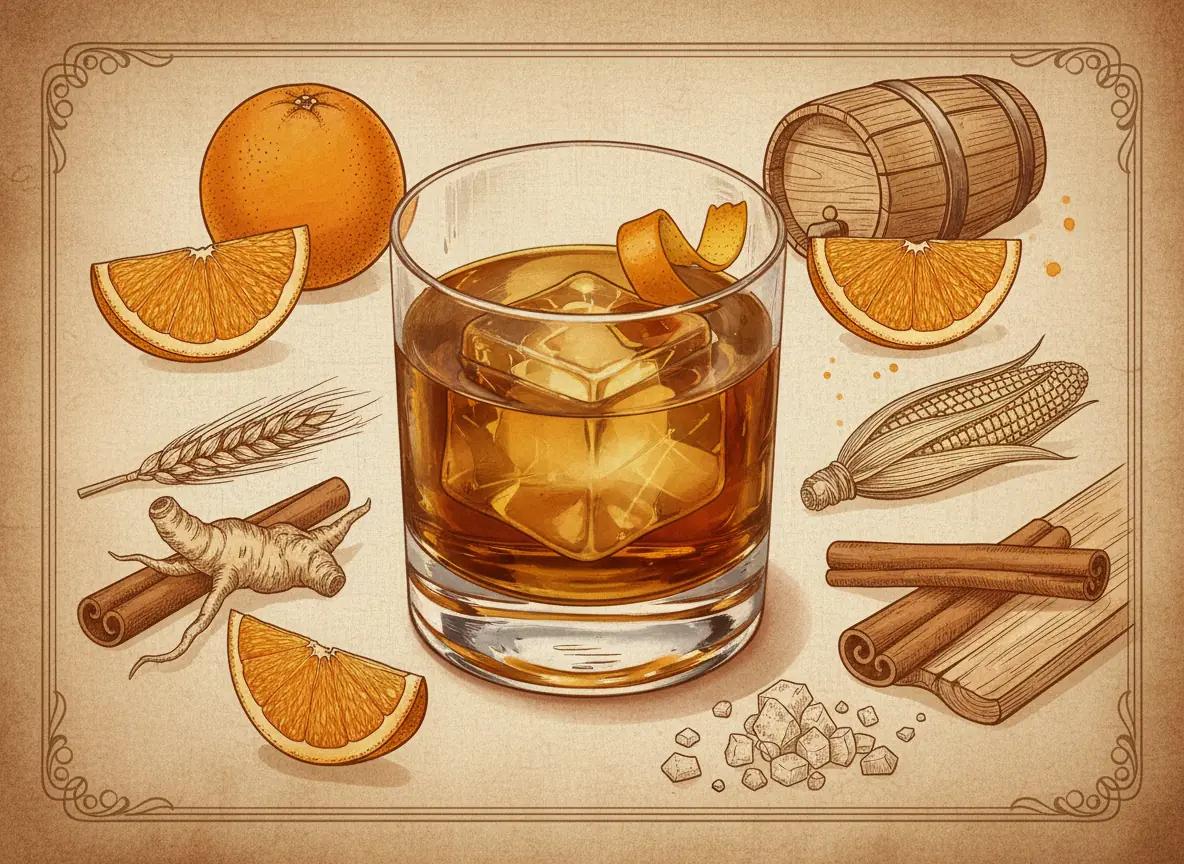
The Old Fashioned is the oldest documented cocktail in the American canon and the drink from which the word cocktail derives its original meaning. Its first print definition, in 1806, as a stimulating liquor composed of spirits, sugar, water, and bitters, describes the Old Fashioned before the name existed. The name came in the 1880s, when bartenders began adding fruit and soda to the format and drinkers who preferred the original asked for their cocktail the old-fashioned way. Three ingredients in their purest form: whiskey, sugar, and bitters; the expressed orange peel and the ice are conditions of the serve rather than additions. The simplicity is the entire point. Built properly, with a quality bourbon or rye, it is one of the most satisfying drinks in the canon; built badly, one of the most disappointing. Rye versus bourbon is the most common argument and the least interesting one. Both are correct. Rye produces a drier, spicier result where the bitters are more prominent; bourbon a rounder, sweeter one where the vanilla and caramel of the grain lead. What is a matter of correctness: sugar fully dissolved, bitters measured rather than dashed freely, and the drink stirred rather than shaken.
Old Pal
The Old Pal is rye, Campari and dry vermouth in a Boulevardier's shape with the sweet vermouth swapped out. That single change does considerably more than it sounds like it should. Sweet vermouth in a Boulevardier is a cushion: it pads the Campari's bitterness and rounds the whiskey. Take it away and put dry vermouth in its place, and the Campari argues unpadded while the rye's pepper sharpens. The drink runs leaner, drier and more bracing than its amber sibling, and it belongs before dinner where the Boulevardier belongs after, which is a real distinction rather than a stylistic one. Both come out of Harry MacElhone's Paris in the 1920s and both appear in his books. This one is dedicated to William Robertson, a sports journalist on the Paris Herald and the old pal of the title, which is a more affectionate origin than most drinks manage to claim, and a rarer one than it ought to be.
Paper Plane
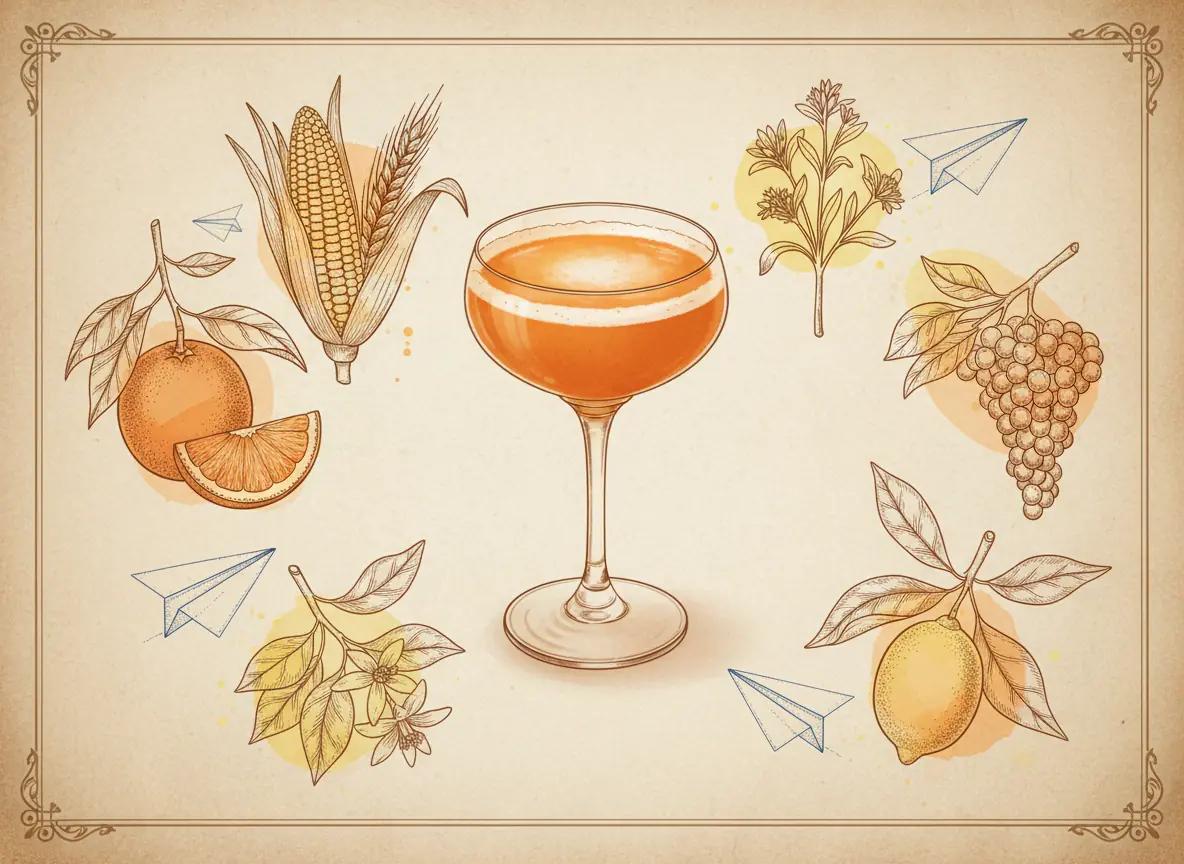
The Paper Plane was created by Sam Ross at Milk & Honey in New York around 2007 and named after the M.I.A. song that was playing while he developed it. It is an equal-parts build of bourbon, Aperol, Amaro Nonino and fresh lemon juice, shaken and served cold, and it stands as one of the most precisely constructed modern classics in the canon. Equal parts is an unforgiving format. Every ingredient is fully exposed at the same volume, and a weak choice in any one of them changes the character of the finished drink in a way no adjustment elsewhere can correct. The bourbon provides warmth and vanilla. The Aperol provides bitter orange and a lightness that stops the drink turning heavy. The Nonino provides herbal complexity and a mid-palate depth neither of the others could contribute. The lemon holds all three together. Substituting a cheaper amaro for Nonino is the most common mistake made with this recipe, and the one that most visibly changes the result.
Penicillin
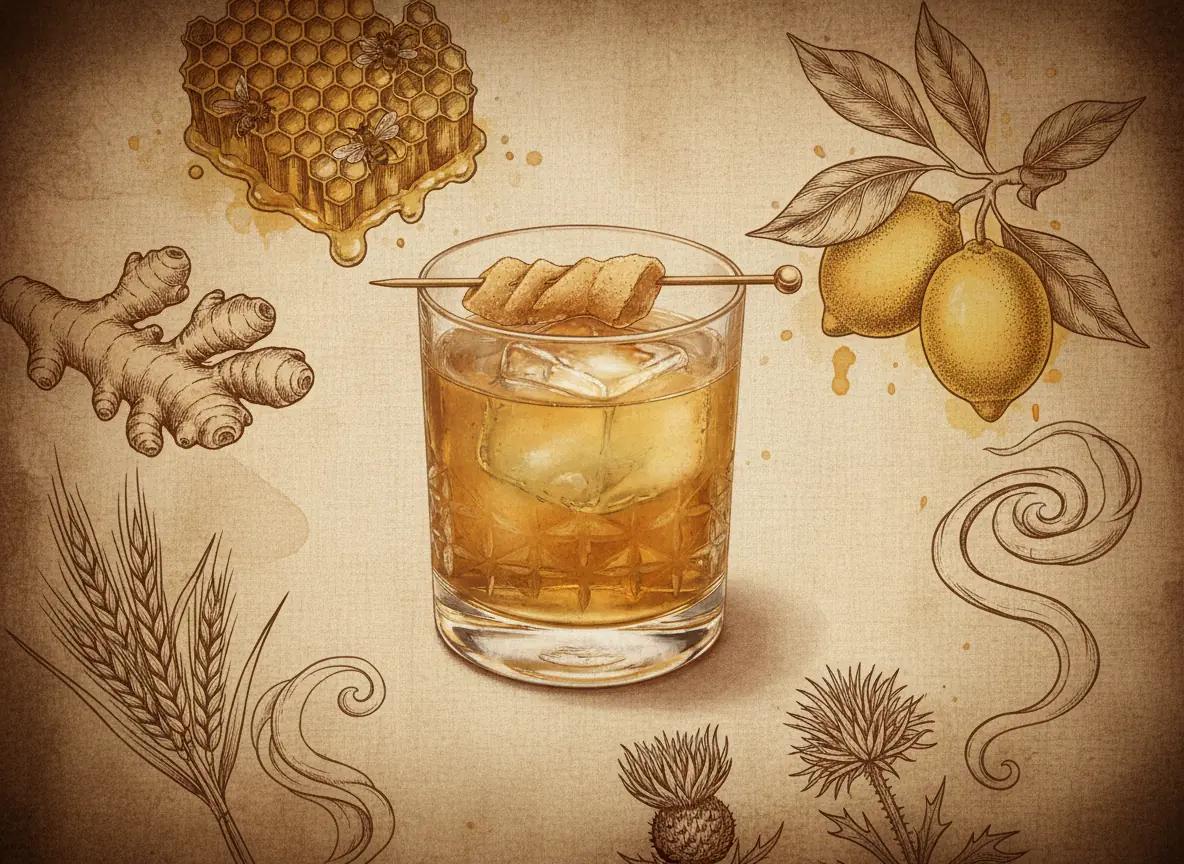
The Penicillin was created by Sam Ross at Milk & Honey in New York in 2005 and is one of the most significant original cocktails of the contemporary revival. Ross also created the Paper Plane; the Penicillin is the more complex and more demanding of the two. The structure is a whisky sour built on blended Scotch, sweetened with honey syrup and given its heat by fresh ginger shaken in alongside it, with a float of Lagavulin 16 over the surface. Honey and ginger together define the drink's character, combining floral sweetness with a sharp, spiced bite. The blended Scotch supplies the base, and the float supplies the peated smoke that the blend alone could not deliver at the volume a balanced sour requires. The float is the technique most commonly misapplied. Poured correctly it sits as a distinct aromatic layer, met at the nose and on the first sip before integrating gradually into the drink below.
Pickleback
The Pickleback is two shots taken in strict order: whiskey first, cold dill pickle brine immediately after. The brine erases the whiskey's burn so completely that people meeting it for the first time routinely ask to check the bottle. It was named at the Bushwick Country Club in Brooklyn in 2006, where the bartender Reggie Cunningham poured the pairing at a customer's suggestion using the bar's stock of McClure's pickles. The combination itself is much older, whiskey and brine having been folk practice in the American South and across Eastern Europe for generations. What the bar supplied was the name and the ritual. The mechanism is real. Salt and acid both interfere with how the palate registers ethanol heat, so a brine chaser arriving while the burn is still developing switches it off and leaves the warmth behind. It is the same principle as a salt rim on a Margarita, staged as a piece of theatre rather than as a garnish.